Most people grow up believing danger announces itself loudly, through chaos, urgency, and unmistakable warning signs. We imagine threats arriving with alarms, broken glass, or dramatic confrontations that make it obvious something is wrong. Because of this belief, everyday moments like parking a car or running errands feel automatically safe. Yet many real-world risks arrive quietly, hidden inside ordinary situations we barely notice.
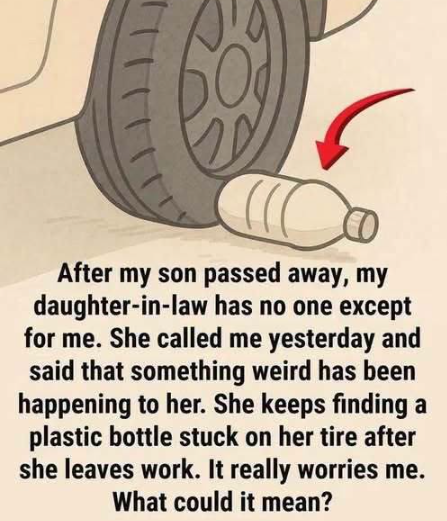
One example is a plastic bottle lodged between a tire and the wheel well. To most drivers, it looks like nothing more than random litter pushed by the wind. It seems harmless and easy to ignore. In rare cases, however, this object has been used as a distraction, relying not on force, but on instinct. The danger is not the bottle itself, but the moment of surprise it creates.
Driving is often automatic, especially after a long or exhausting day. When an unexpected crackling sound comes from the wheel, instinct immediately takes over. Concern rises before logic has time to respond. Many people stop quickly and step out to investigate, often leaving doors unlocked, engines running, and valuables visible. That brief lapse in awareness creates vulnerability.