I saw it the second I stepped outside, and my stomach dropped.
At first, I couldn’t even process what I was looking at.
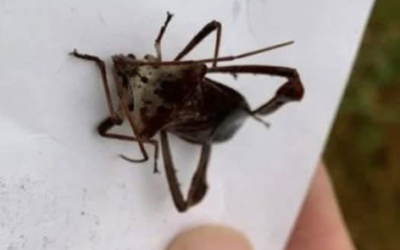
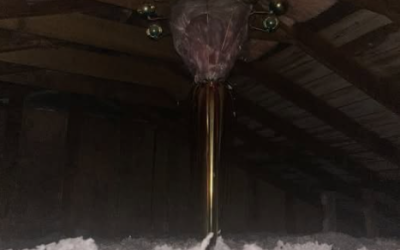
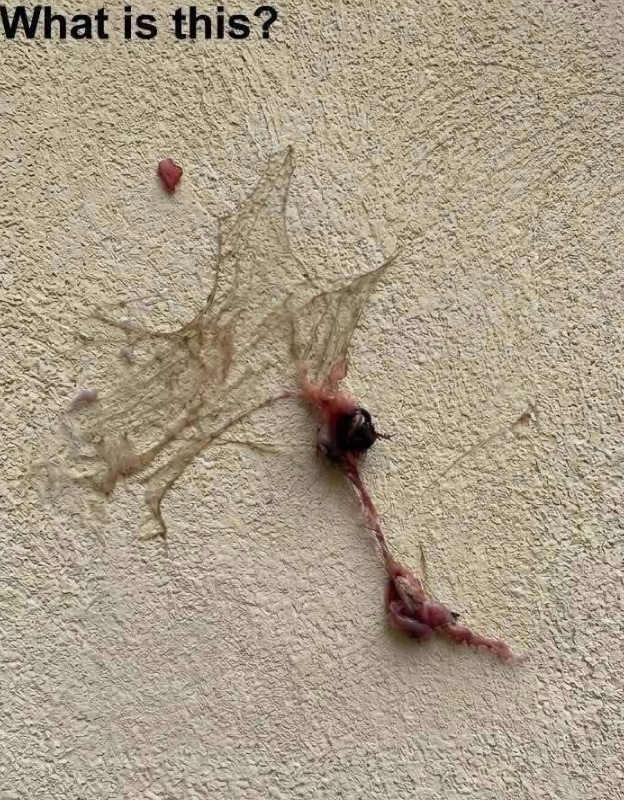
There, attached to the wall near the garage, hung something so strange and unsettling that my mind immediately rejected every ordinary explanation. It seemed suspended between recognizable and impossible, familiar and horrifying. A thin, pale membrane stretched awkwardly across part of it, catching the light in a way that made it appear disturbingly human from a distance.
I froze.
The longer I stared, the worse it seemed.
My brain began searching desperately for answers, flipping through possibilities faster than logic could keep up. Was it some kind of animal? A strange fungus? Something left behind as a prank? Every explanation felt incomplete. Every answer created new questions.
What made it especially unsettling was how still it was.
There was no movement.
No sound.
No obvious clue revealing what it had once been.
It simply clung to the wall like a scene from a nightmare that had somehow wandered into an otherwise ordinary afternoon.
Soon, other people noticed it too.
Neighbors slowed down when they passed by. Some stopped entirely. Curious glances turned into conversations. Conversations turned into theories.
And the theories became increasingly bizarre.
One person suggested it might be the remains of a rare animal. Another wondered if it was some kind of parasite. Someone joked that it looked like something from a horror film, but the joke only made the atmosphere stranger because everyone understood exactly what they meant.
Nobody seemed comfortable looking at it.
Yet nobody could stop looking.
That was the strange power it held.
The object itself wasn’t moving, wasn’t threatening anyone, and wasn’t doing anything at all. Yet it commanded attention with an almost magnetic force. Every person who saw it seemed compelled to stare a little longer than they intended.
I was no different.
Several times, I walked away only to find myself turning back for another look.
Each glance reignited the same uncomfortable feeling.
The same question.
What am I actually seeing?
Hours passed before the mystery was finally solved.
The answer arrived not through some dramatic discovery or shocking revelation but through a much simpler explanation.
And like many simple explanations, it felt simultaneously relieving and unsettling.
What I was seeing wasn’t supernatural.
It wasn’t mysterious.
It wasn’t evidence of anything extraordinary.
It was simply the remains of a small animal.
Most likely, the unfortunate creature had been caught by a bird of prey. Somewhere overhead, a hawk, owl, or similar predator had been carrying its meal when part of the remains fell and landed against the wall. The pale membrane that had looked so disturbing from a distance was merely exposed tissue and skin, altered by injury, weather, and perspective.
That was it.
No monster.
No curse.
No conspiracy.
Just nature.
Yet the explanation didn’t erase the feeling entirely.
If anything, it left me with a different kind of discomfort.
Because once the fear disappeared, another realization took its place.
The object itself had never been the most interesting part of the experience.
My reaction was.
Within seconds of encountering something unfamiliar, my mind had raced toward the most dramatic possibilities available. Before gathering evidence, before seeking information, before applying logic, I had instinctively reached for fear.
And I wasn’t alone.
Nearly everyone who saw it had done the same thing.
It’s remarkable how quickly the human brain fills gaps in understanding.
When we lack information, imagination rushes in to replace it.
Sometimes that imagination produces wonder.
Other times, it produces monsters.
A strange shape becomes a creature.
An unusual sound becomes a threat.
An unexplained event becomes a conspiracy.
We are natural storytellers, constantly constructing explanations whether the evidence supports them or not.
Standing there beside that wall, I found myself thinking about how often this happens in everyday life.
How many fears begin exactly the same way?
A lack of information.
A confusing image.
An unfamiliar situation.
Then, almost instantly, our minds begin writing horror stories.
The real explanation is often less dramatic.
But not necessarily less meaningful.
Because while the object on the wall wasn’t evidence of something supernatural, it was evidence of something very real.
Nature.