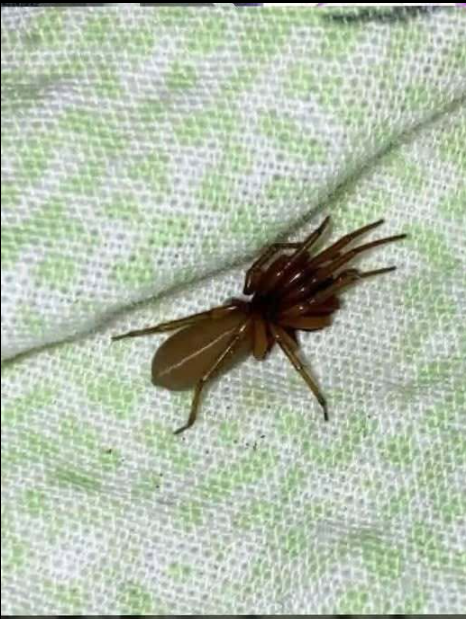
Its role in the ecosystem is actually quite beneficial. By feeding on a variety of insects and other small creatures, the spider helps regulate populations that might otherwise grow unchecked. In this way, it contributes to maintaining balance within its habitat. Predators such as the red-fanged wandering spider play an important role in controlling insect numbers and supporting healthy ecosystems.
What makes this species particularly interesting to researchers is the fact that it has evolved so successfully without relying on webs as its primary hunting tool. For many people, webs are almost synonymous with spiders, yet this hunter demonstrates that there are multiple paths to survival. Through a combination of specialized sensory adaptations, mobility, stealth, and venom, it has carved out a unique ecological niche that allows it to thrive where other species might struggle.
Scientists continue to study these remarkable spiders in an effort to better understand how their behavior evolved over time. By examining their hunting techniques, sensory systems, and physical adaptations, researchers gain valuable insights into the incredible diversity of strategies that have emerged throughout spider evolution. Each discovery reveals more about how different species adapt to changing environments and develop specialized methods for survival.
The red-fanged wandering spider serves as a powerful reminder that nature often rewards innovation. Rather than relying on the traditional web-building approach, it became a hunter that actively seeks out its prey under the cover of darkness. Its success proves that patience behind a web is not the only route to becoming an effective predator.
As night falls and most creatures retreat from view, the red-fanged wandering spider begins its silent patrol. Moving through leaves, across forest floors, and among hidden corners of its habitat, it demonstrates a hunting strategy built on stealth, precision, and adaptability. Its story highlights the extraordinary variety found within the natural world and reminds us that some of nature’s most successful predators are not those that wait for opportunity to arrive, but those that actively pursue it.
Through speed, specialized senses, powerful venom, and remarkable agility, the red-fanged wandering spider has established itself as one of the most fascinating hunters in the arachnid world. It stands as proof that even among spiders, the most impressive species are often the ones that choose a completely different path from the rest.