I’ve always considered myself someone who pays attention to health.
Not obsessively.
But enough to think I was doing “okay.”
I ate reasonably well, tried to move my body, and assumed that if something serious was happening inside me… I would notice.
But what I later learned about clogged arteries completely changed that assumption.
Because the truth is uncomfortable:
Our bodies don’t always scream when something is wrong.
Sometimes, they whisper.
And if you’re not paying attention, those whispers can turn into emergencies.
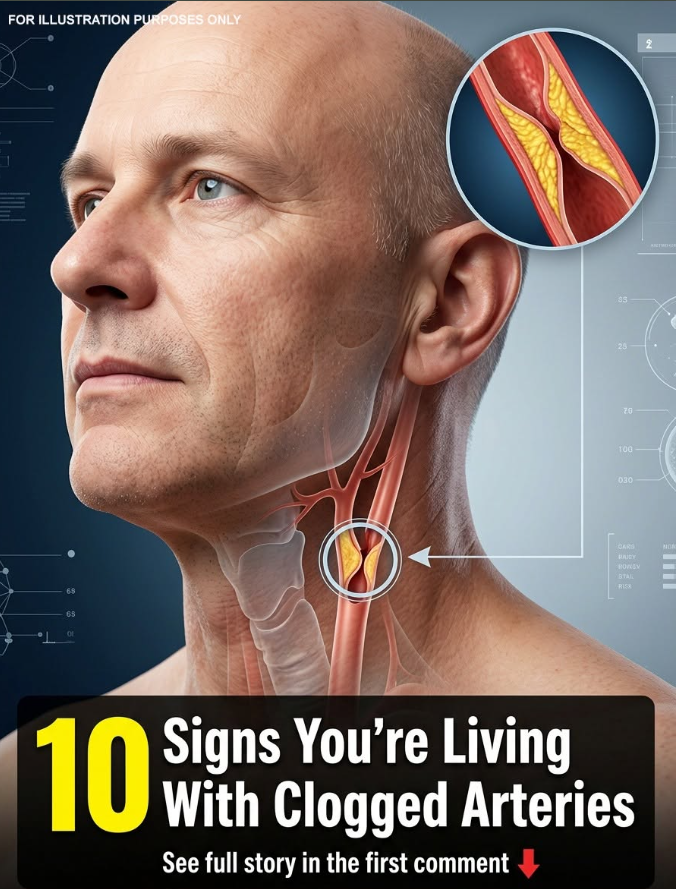
Why clogged arteries are so dangerous
Your arteries are essentially the transport system of your body.
They carry oxygen-rich blood from your heart to every organ, every muscle, every part of you that needs energy to function.
When they are healthy, blood flows freely—like a clear river.
But when plaque begins to build up inside the artery walls, that flow slowly narrows.
At first, nothing feels wrong.
Then the body adapts.
Then it struggles.
And by the time symptoms become obvious, the problem is often already serious.
This condition—often linked to plaque buildup—is one of the major risk factors behind heart attacks, strokes, and other cardiovascular complications.
That’s why early awareness matters so much.
Not to create fear…
but to create attention.
Because the earlier you notice the signs, the more options you have to act.
For illustrative purposes only
Why early detection matters
Many people assume heart-related issues appear suddenly.
But in reality, they often develop slowly over time.
Lifestyle, genetics, diet, stress, and other health conditions can all play a role in how quickly arteries become narrowed.
The encouraging part is this:
Early awareness can make a difference.
Doctors may recommend lifestyle adjustments, monitoring, or medication depending on severity.
But the first step always begins with recognizing what your body is trying to tell you.
Below are ten warning signs often associated with restricted blood flow that you should never ignore.
1. Nausea
Nausea is one of those symptoms that feels vague.
It can come from many different causes—food, stress, illness, or digestive issues.
But in some cases, persistent or unexplained nausea may be linked to reduced blood flow in the body.
When circulation is compromised, your organs don’t receive oxygen efficiently, which can create that uneasy, unsettled feeling in your stomach.
If nausea becomes frequent or unexplained, it’s worth discussing with a healthcare professional.